





ENGLEWOOD BEACH
Where
Englewood Beach at Chadwick Park is located at 2100 N Beach Road, Englewood, FL 34223.
Vibe
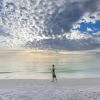
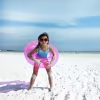
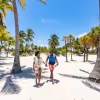
Popular, family-friendly getaway with a myriad of ways to play. Though Englewood Beach can get crowded during peak times, it has a relaxed feel, promising a place to unwind and enjoy the natural beauty of the Gulf Coast, not party. Here, you might see little ones wading in the shallows; anglers casting their lines into the surf; and beachgoers sunning or strolling by the waves. The occasional boat cuts through the offshore waters, sometimes with a parasailer in tow, adding to the tropical mood.
See, feel
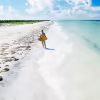
Comfortable amenities, a pristine beach and blockbuster sunsets are just a few of the things you can expect to find at Englewood Beach. The beach is laden with smooth, latte-hued sand, with a bottom that slopes gently into the shallow, emerald waters of the Gulf of America, making it inviting for toddlers and timid swimmers. Generous dunes with a smattering of palms provide a tranquil backdrop.
While the water is usually calm, winds, tides and offshore systems can occasionally cause rough conditions.
On or near the beach
Englewood Beach packs a slew of fun into this 12.67 acre park, offering not sunning, swimming and strolling the shores; but also fishing; volleyball, horseshoes; basketball; and a shaded playground. Bring something to grill or refuel with a picnic under a pavilion or the shade of a palm tree. If you want someone else to do the cooking, head just across the street to SandBar Tiki and Grille, serving up live music, tropical concoctions and casual beach fare; or the Lock and Key, with a decadent menu of prime rib and fresh catches.
Accessibility
Beach wheelchairs are available seven days a week on a help yourself basis, starting at 7:30 a.m., and must be returned by 3:30 p.m. Englewood also offers ADA parking, which is free.
Facilities
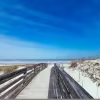
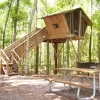
Englewood Beach promises a 900-foot boardwalk with three covered lookouts; restrooms; showers; water stations; volleyball courts; a basketball court; horseshoe pits; a playground area; four small shelters with picnic table and grills; and three large pavilions, all complete with picnic tables and charcoal grills.
Lifeguards
There are no lifeguards; swim at your own risk.
Englewood Beach uses Florida's standard beach warning flag system to show daily water and surf conditions.
Flag Meanings
- Green: Low hazard and calm conditions.
- Yellow: Medium hazard with moderate surf or currents.
- Red: High hazard with strong surf and currents.
- Double Red: Water is closed to the public.
- Purple: Dangerous marine life (like jellyfish) is present.
You can check current conditions or local updates through Charlotte County's Englewood Mid Beach page, but you should always look at the physical flags posted at the beach before entering the water.
Parking
Here’s information about parking, which can fill quickly on weekends and holidays.
FREQUENTLY ASKED QUESTIONS ABOUT ENGLEWOOD BEACH
Q. Where is Englewood Beach?
A. On Manasota Key, at 2100 N. Beach Road, Englewood, Florida 34223. Its full name is Englewood Beach at Chadwick Park, and it's a Charlotte County park of about 12.7 acres that opened in 2001. You can reach it at 941-681-3742.
It sits toward the southern end of the key and is the most developed beach on the island. Charlotte County currently gives Englewood Beach hours as 6 a.m. to 9 p.m.
Q. Which county is it in? I've seen both.
A. Charlotte County. The confusion is understandable, because Manasota Key straddles a county line and the community of Englewood does too.
Here's the split. Englewood Beach at Chadwick Park, at the southern end of the key, is a Charlotte County park. Head north up the same island and you cross into Sarasota County, where Blind Pass Beach and Manasota Beach are Sarasota County parks. Same strip of sand, different governments, different rules and different parking systems.
Q. Are there lifeguards?
A. No. Englewood Beach does not have lifeguards on duty, and swimming is at your own risk.
This is one place the county line genuinely matters. Manasota Beach, north of here in Sarasota County, is one of the six Sarasota County beaches with staffed lifeguard towers. Blind Pass Beach, between the two, has none. So of the three main public beaches on this island, only the northernmost is guarded.
Q. How do I judge the water before swimming?
A. Englewood Beach uses Florida's standard beach warning flag system to show daily water and surf conditions.
Flag Meanings
- Green: Low hazard and calm conditions.
- Yellow: Medium hazard with moderate surf or currents.
- Red: High hazard with strong surf and currents.
- Double Red: Water is closed to the public.
- Purple: Dangerous marine life (like jellyfish) is present.
You can check current conditions or local updates through Charlotte County's Englewood Mid Beach page, but you should always look at the physical flags posted at the beach before entering the water.
The Gulf along Manasota Key tends to be calm, and the bottom shelves gradually. Tends to. Wind, tides and passing storms change it, and rip currents can form even when the surface looks flat. If one pulls you out, swim parallel to shore until it lets go rather than fighting straight back in. Call 911 in an emergency, since there's no guard to signal. Take particular care near Stump Pass at the island's south tip, where tidal currents run hard.
Shuffle your feet as you go in to warn away stingrays. If you're stung, soak the wound in hot water and get medical attention.
Q. How does parking work?
A. Parking is paid by the hour, and the main lot is small for how popular the beach is. The normal rate is 75 cents an hour, although Charlotte County currently says parking fees have been temporarily suspended. Check the county's parking page before you go. Seasonal and annual passes are sold at any Charlotte County recreation center, at the Tax Collector's office, or by calling 941-625-7529.
There's a better option on busy days that most visitors don't know about: a free park-and-ride shuttle runs from Tringali Park at 3460 N. Access Road to the beach, 10 a.m. to 4 p.m. Monday through Saturday, leaving at the top and bottom of every hour. If the lot is full, that's the answer rather than circling.
Q. What amenities are there?
A. Quite a lot, which is what sets this beach apart from the quieter ones up the key. There's a 900-foot boardwalk with three covered lookouts, restrooms, showers and water stations, volleyball courts, a basketball court, horseshoe pits and a playground.
For groups there are three large pavilions and four small shelters, all with picnic tables and grills. The pavilions can be reserved online or by calling 941-681-3742.
Q. Is the beach accessible?
A. Yes, and better than most beaches in the area. Beach wheelchairs are available at the park at no charge, daily from 7:30 a.m. to 3:30 p.m. on a help-yourself basis. Note that window closes well before the beach empties out in the evening, so plan around it. Call 941-505-8686 for more details.
The 900-foot boardwalk also does real work here, carrying you along the beachfront and out to the covered lookouts without crossing loose sand. Restrooms and accessible parking are on site.
Q. Can I bring my dog?
A. No. Dogs are not permitted on Charlotte County beaches or fishing piers. That's county ordinance rather than a park rule, so it applies whether or not anyone is there to enforce it. Service animals as defined by the Americans with Disabilities Act are permitted. The county's dogs in parks page covers where dogs can go.
Q. What else is nearby on Manasota Key?
A. Stump Pass Beach State Park is at the southern tip, a short drive down Beach Road, with a walking trail out to the pass and a much wilder feel than the county beach. Blind Pass Beach and Manasota Beach are north in Sarasota County, both quieter, with Blind Pass offering free parking across the road, an accessible playground, picnic structures and a kayak launch on the bay side.
The strip of restaurants and bars right at the Englewood Beach access is walkable from the sand, which is not true of most beaches on this coast.
Q. Is this a good spot for shelling or shark teeth?
A. Yes, and it's one of the reasons people come. This stretch of coast is known for both, and fossilized shark teeth turn up regularly along Manasota Key. A small scoop or sifter helps.
Shelling is generally best in the cooler months and after a blow, when more washes ashore. Collecting live shells is prohibited in Florida state parks, so if you walk down to Stump Pass, take only empty ones.
Q. Is it good for families?
A. It's a strong choice, mostly because of the facilities. The playground, courts, restrooms, showers, pavilions and food are all in one place, and the Gulf here shelves gently.
The absence of lifeguards is the thing to plan for. Stay within arm's reach of small swimmers, and make sure to check the beach warning flag before you get in the water.
Q. When should I visit?
A. Winter through early spring brings warm, dry, low-humidity days, and it's the busiest season here, so the lot fills earliest then and the shuttle is most useful. The trade-off is water temperature: the Gulf cools into the upper 60s in January and February, which many people find too cold for extended swimming.
Spring and fall balance warm water against comfortable air. Summer is hot and humid with the warmest water and afternoon thunderstorms that usually move through quickly.
Q. What about sea turtles?
A. Nesting season along Manasota Key and the Charlotte Harbor coast runs May 1 through Oct. 31. Manasota Key is one of the more heavily nested stretches on this part of the Gulf, and loggerheads do most of it.
Leave nests and their stakes alone. Fill in any holes you dig and flatten sandcastles before you leave, because a hatchling can be trapped by either. Take chairs, umbrellas and toys off the sand overnight. And keep lights off the beach after dark if you're staying Gulf-front, since artificial light draws hatchlings inland instead of out to the water. The state's sea turtle lighting guidance covers the specifics, and disturbed nests or injured turtles go to the Wildlife Alert line at 888-404-3922.


